
Home › Basement Window Well Drainage Problems
A leaking basement window well is usually a drainage problem, not a window problem — when the well has no working drain or gravel bed underneath it, it holds water like a bucket until it eventually finds its way past the window and into the basement.
How Window Well Drainage Should Work
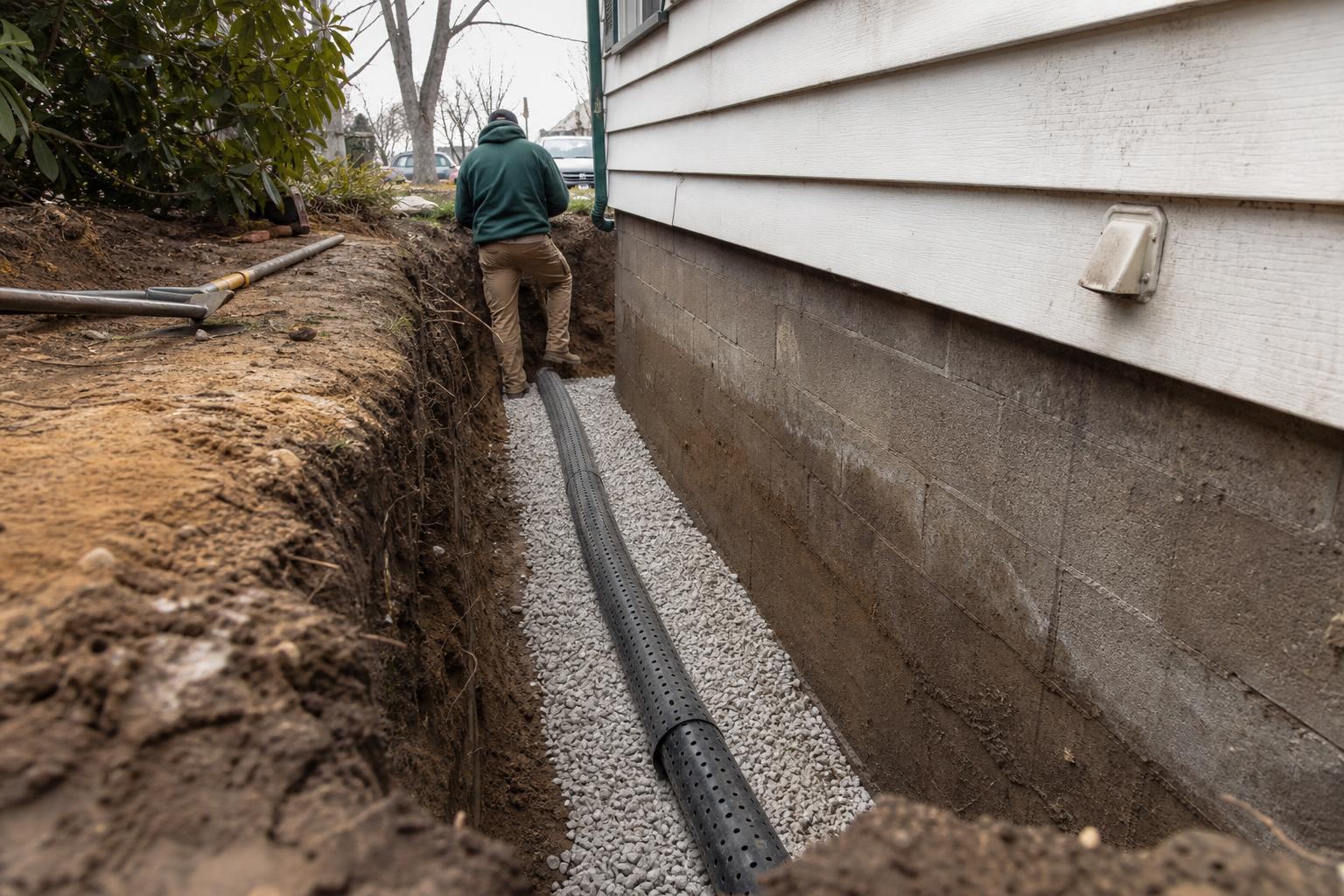
A properly built window well has either a drain tied into the home’s footer drainage system, or at minimum a deep gravel bed that lets water percolate down and away rather than pooling. Over time, that drain or gravel bed can clog with dirt, leaves, and debris, or it may never have been installed correctly in the first place, especially in older homes.
Signs the Drainage Has Failed
A window well that’s visibly full or slow to drain after rain is the clearest sign. Inside the basement, water staining below the window, a musty smell concentrated near that specific window, or visible water intrusion during or after a storm all point back to well drainage as the likely cause, rather than the window itself. Catching a basement window well leaking early usually means a simpler, cheaper fix.
Fixing the Drainage
The fix usually starts with clearing out the well and checking whether a drain exists and is functional, or adding a proper gravel bed if the well has never had adequate drainage. Window well drainage repair often solves the problem on its own without needing to touch the window itself, since the root cause is usually water with nowhere to go rather than a failed window seal.
When the Window Itself Also Needs Attention
If drainage is corrected and water is still getting in, the window frame or seal may also need attention — an older or deteriorated window frame can let water through even with a well that drains properly. Adding a window well cover is a good added step either way, since it keeps rain and debris from accumulating in the well in the first place.
Why Window Wells Are Often an Afterthought
Window wells are sometimes installed as a basic requirement rather than a carefully planned drainage feature, especially in older homes where they may have been added or modified after the original construction. Over decades, the gravel bed or drain that was originally there can compact, clog with silt, or simply never have existed in the first place, which is part of why window well drainage problems are so common in older Fort Wayne neighborhoods.
Preventing Future Window Well Problems
Beyond fixing current drainage, keeping the well clear of leaves and debris, checking it after major storms, and adding a well cover all help prevent the problem from recurring. If your home has multiple window wells, it’s worth checking all of them even if only one has shown a problem, since they were often installed the same way and may share the same underlying drainage issue. We can check every well while we’re already assessing one.
Window Well Materials and Their Impact on Drainage
Window wells come in a few common materials — corrugated metal, molded plastic, and poured concrete are the most typical in this area — and while the material itself doesn’t determine drainage quality, older metal wells in particular are prone to rusting through at the base over time, which can actually create an unintended drainage path directly into the soil below, sometimes working adequately by accident until the rust progresses further and the well starts to fail structurally. If your window well is older metal and showing rust, that’s worth factoring into the repair conversation alongside the drainage itself.
Coordinating Window Well Work With Other Basement Projects
If you’re already planning other exterior work near your foundation, like grading correction or exterior waterproofing, it often makes sense to address window well drainage at the same time, since the excavation and access are already part of the project. Bundling window well repair with other planned exterior work can be more efficient than addressing it as a separate project later, and we’re happy to talk through timing if you’re weighing multiple projects at once.
How This Fits Into Overall Basement Waterproofing
Window well drainage is often one piece of a larger picture rather than the whole story — a basement can have both a leaking window well and a separate wall or floor issue happening independently. During an assessment, Drew Dryer checks the whole basement rather than assuming a window well is the only source just because it’s the most visible one, since treating only the obvious cause while missing a second, less visible one leaves you with a basement that’s still not fully dry.
Checking All Your Window Wells at Once
If your home has more than one basement window well, it’s worth having all of them checked during the same visit rather than addressing them one at a time as each starts leaking, since they were often built the same way and may share the same underlying drainage issue. Drew Dryer can look at every well on the property in one visit and give you a complete picture rather than a piecemeal one. It’s worth having every well checked at once rather than dealing with a basement window well leaking one at a time.
Get Help With Your Basement
If a window well keeps filling with water, Drew Dryer can check the drainage and the window and tell you plainly what it needs. Call (260) 305-1147 or reach out here. He can get to the bottom of a basement window well leaking for good.
Related service
More guides
About the author
Drew Dryer, Owner
Drew Dryer owns and runs Dryer Basement Waterproofing Fort Wayne. He has 10 years of experience waterproofing basements in the Fort Wayne area, and started the business to work directly with homeowners rather than through a sales layer.
Last updated: September 30, 2026


