
Home › Interior vs Exterior Basement Waterproofing
Interior vs. exterior basement waterproofing comes down to where the work happens: interior waterproofing manages water from inside the basement with drain tile and a sump pump, while exterior waterproofing seals the foundation wall from outside before water reaches it. Interior work fits most Fort Wayne basements dealing with water through the floor or cove joint; exterior work is the right call when the wall itself is cracking, bowing, or has failed despite interior fixes.
How Interior Waterproofing Works
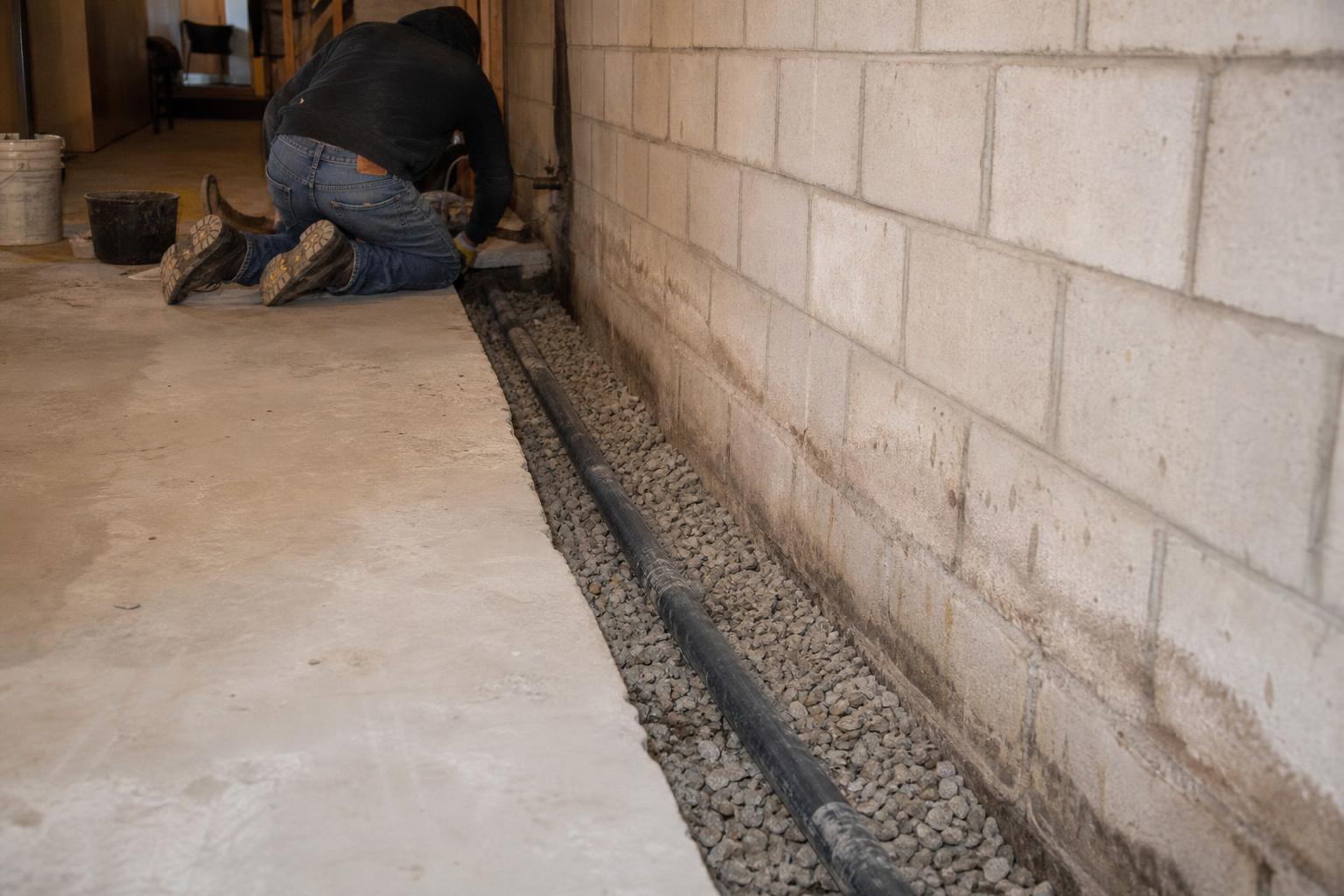
Interior waterproofing typically involves cutting a channel along the basement floor’s perimeter, installing drain tile below floor level to intercept water, and routing it to a sump pump that discharges it away from the house. Because it doesn’t require excavating around the home, it’s usually less expensive and less disruptive than exterior work, and it can be done in any weather since it doesn’t depend on ground conditions outside.
How Exterior Waterproofing Works
Exterior waterproofing means excavating along the foundation, repairing any cracks, and applying a waterproof membrane directly to the wall along with drainage at the footer. It stops water before it ever reaches the block or concrete, which makes it the more thorough fix for a wall that’s actively failing, but it costs more because of the excavation and disturbs landscaping, walkways, or patios near the foundation.
Interior vs. Exterior Basement Waterproofing: The Real Difference
Interior systems manage water after it’s already at the wall or floor; exterior systems stop it before it gets there. For most Fort Wayne basements — where the issue is water coming up through the floor joint or seeping through a stable wall under normal clay-soil pressure — interior work handles it well. Exterior work becomes the better answer specifically when the wall itself shows structural signs like bowing, significant cracking, or when other exterior work is already planned and the ground will be disturbed anyway.
Cost and Timeline Differences
Interior work is generally faster to schedule and complete since it doesn’t depend on digging conditions, and it’s typically less expensive for a comparable scope of coverage. Exterior work takes longer because of excavation and restoration afterward, and pricing is higher due to the labor and equipment involved. Neither is inherently “better” — they solve different problems, which is why an honest assessment matters more than picking one option in advance. Cost is usually the first thing homeowners ask about when comparing interior vs exterior basement waterproofing, but timeline and disruption matter just as much.
Common Questions
Should I waterproof my basement from the inside or outside?
Interior waterproofing is the right call for most Fort Wayne basements because it manages water already coming through the floor or cove joint without the cost of excavating outside, while exterior work makes more sense when the wall itself is cracking or bowing. That question is really at the heart of interior vs exterior basement waterproofing decisions for most Fort Wayne homes.
Can I waterproof my basement walls from the inside?
Yes — interior drain tile manages water along the base of the wall and floor from inside the basement, and for light dampness a masonry sealer can help, though neither replaces exterior work for a wall under real structural stress.
A Third Option: Fixing It From Outside Without Full Excavation
There’s occasionally a middle ground — addressing a specific, localized section of exterior wall rather than the full perimeter, especially if the problem is concentrated in one area, like near a downspout or a low grading spot. This costs less than a full exterior system but more than interior work, and it only makes sense when the cause is clearly tied to that one section rather than general pressure around the whole foundation. It’s not the right fit for most basements, but it’s worth mentioning during an assessment if your situation fits.
How Long Each Option Typically Lasts
A properly installed interior drain tile system, maintained with basic sump pump upkeep, can last for decades, since the components — pipe, gravel, and a serviceable pump — don’t degrade quickly when installed correctly. Exterior membrane systems are also built for the long term, generally matching or exceeding the lifespan of interior systems, since they’re addressing the wall directly rather than managing water after the fact. Neither option is a short-term fix when installed properly, which is part of why the upfront choice matters.
Considering the Age and Condition of Your Foundation
The age and material of your specific foundation plays into this decision more than people expect. A poured concrete foundation, generally more common in newer Fort Wayne construction, tends to be less porous than block, which sometimes means water intrusion is more localized to specific cracks rather than distributed across the wall — a pattern that often favors targeted interior work or crack repair over a full exterior system. An older block foundation, especially one that’s shown multiple signs of water over many years across more than one wall, is more likely to benefit from a comprehensive approach, whether that’s a full interior drain tile system around the whole perimeter or, if the walls themselves show real wear, exterior work on the most affected sections. This is exactly the kind of judgment call that benefits from an in-person look rather than a general rule applied to every basement the same way.
Get Help With Your Basement
Drew Dryer will look at your basement and tell you plainly which approach actually fits. See our full waterproofing services or call (260) 305-1147 to get started. That’s the real answer on interior vs exterior basement waterproofing for your specific walls.
Related Reading
- Basement Cove Joint Leaks
- Water Coming Through Cinder Block Walls
- Basement Window Well Drainage
- Stair-Step Cracks in Block Walls
More guides
Get help
About the author
Drew Dryer, Owner
Drew Dryer owns and runs Dryer Basement Waterproofing Fort Wayne. He has 10 years of experience waterproofing basements in the Fort Wayne area, and started the business to work directly with homeowners rather than through a sales layer.
Last updated: September 30, 2026
Leave a Reply